
Strategic Alignment of Generational Demographics for Instagram Media Allocations
The Great Platform Migration Myth and Actual Retention Rates
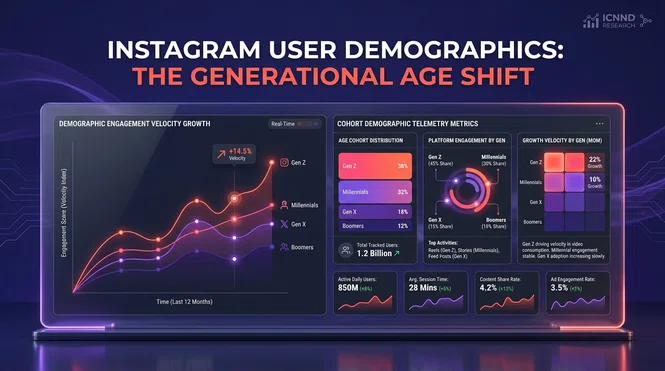
For the past three fiscal cycles, performance marketing directors have faced a persistent narrative: Instagram is losing its youth cohort to emerging vertical video platforms. Media plans across major holding agencies reflexively shifted capital toward alternative apps under the unexamined assumption that Gen Z had abandoned Meta altogether. This narrative stems from surface-level app download rankings rather than deep daily active user (DAU) telemetry.
The quantitative reality reveals a drastically different structural landscape. While initial discovery channels have fragmented, Gen Z retention on Instagram has stabilized through systemic adaptation of the Reels ecosystem. Simultaneously, older cohorts—specifically Gen X and Baby Boomers—are experiencing the highest relative percentage growth in platform session frequency and duration. Media buyers who over-rotated away from Meta are now paying premium CPMs elsewhere to capture an audience that never truly left.
Meta’s unified advertising infrastructure neutralizes demographic migration by operating a single cross-surface auction engine. Even when organic attention moves between Stories, Direct Messages, and Reels feeds, the bidding machinery maintains continuous user mapping. Treating user movement as platform abandonment rather than surface reallocation introduces severe inefficiencies into media plans.
Stop assuming Gen Z abandoned Instagram. While youth attention has shifted to Reels and DMs, older cohorts (Gen X and Boomers) represent the fastest-growing segment for paid click-throughs and conversions. Media planners must stop chasing single-demographic hype and structure budgets around cross-generational attention arbitrage across Meta’s unified auction engine.
Rather than framing budget allocations around demographic migration fears, media planners must leverage cross-generational attention arbitrage. By understanding how distinct age cohorts interact with specific visual surfaces, performance marketers can lower Customer Acquisition Costs (CAC) while scaling top-line revenue.
Gen Z Commercial Behavior Beyond Search and Discovery Patterns
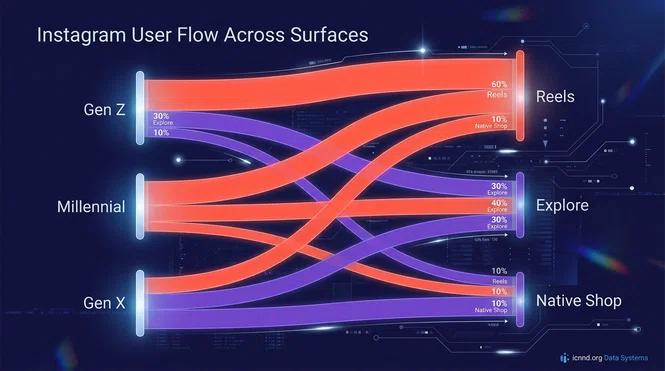
The operational mechanics of how Gen Z interacts with Instagram differ fundamentally from preceding generations. Traditional search engines have lost their monopoly over product discovery. Modern targetologists must recognize that over 40% of Gen Z users utilize Instagram as their primary search engine for product validation, localized business verification, and peer reviews. According to verified industry research on consumer internet behavior patterns, intent-driven searches among younger demographics start inside visual feeds rather than text queries.
This demographic displays an extreme aversion to transactional friction. Redirecting a Gen Z user to an external browser landing page with slow load times results in massive drop-off rates. Conversion velocity increases substantially when campaigns leverage native shop checkouts or instantaneous mobile WebViews that eliminate multi-step form fields.
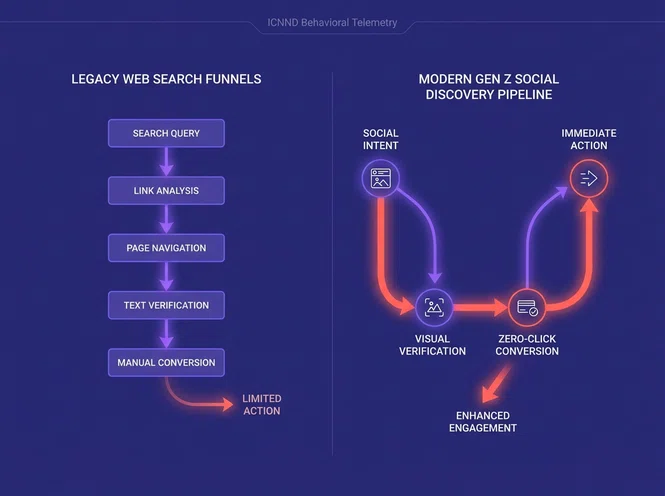
Social proof velocity governs Gen Z purchasing behavior. Polished, highly produced brand assets consistently underperform raw, unscripted user-generated content (UGC) and micro-creator video clips. The algorithmic delivery model powering Reels rewards hyper-niche contextual resonance. Creative assets that attempt broad mass-market messaging are quickly penalized with reduced organic and paid reach.
Millennial Maturation and High Value Purchase Triggers
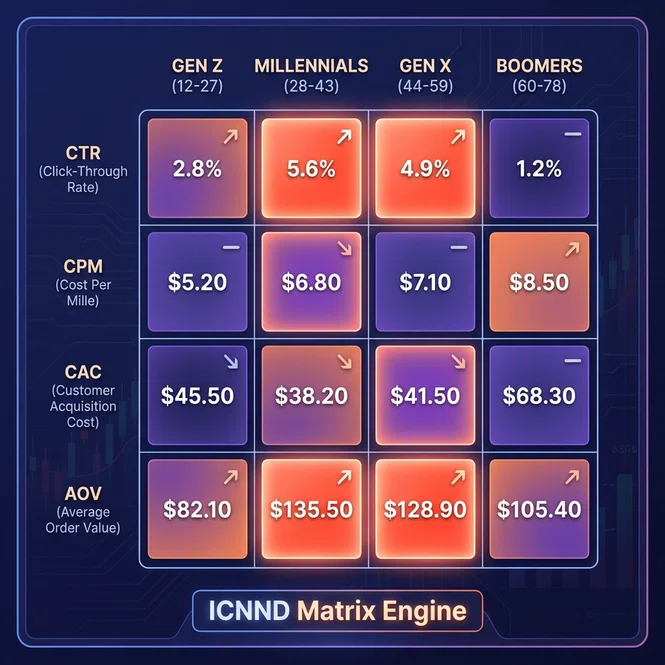
Millennials (ages 28–43) represent the core revenue anchor across the Meta ecosystem. Combining peak career earning years with established digital purchasing habits, this cohort delivers the highest average order value (AOV) for e-commerce, B2B, and premium direct-to-consumer sectors. Unlike impulsive impulse-buy behaviors observed in younger audiences, Millennial transactions are driven by value alignment, subscription convenience, and clear utility.
A structural shift in Millennial behavior is the migration from public feed posting to private communication loops within Direct Messages (DMs). This rise in dark social traffic makes traditional multi-touch attribution challenging. While standard last-click tracking models may register lower public engagement, actual brand discovery occurs continuously via direct sharing among trusted peer networks.
From a creative perspective, short-form video is not the sole driver of consideration for Millennials. In-depth tests show that educational static carousels and detailed long-form captions consistently drive higher save and share metrics among this demographic. To understand how these micro-interactions translate into algorithmic distribution weight, explore our analysis on the hidden business value of saves and shares within performance campaigns.
The Silent Infiltration of Older Cohorts into Meta Visual Ecosystems
Media planners often overlook one of the most profitable opportunities in digital advertising: the aggressive growth of Baby Boomers and Gen X on Instagram. Older demographics are no longer passive observers; they represent the fastest-growing segment for direct ad interaction, yielding higher click-through rates (CTR) and drastically lower customer acquisition costs across DTC verticals such as health, home improvements, and financial services.
This cohort possesses substantial disposable income and higher consumer trust when responding to clear value propositions. However, they are particularly vulnerable to user experience friction. Complex checkout flows or small typography result in immediate abandonment. Crafting dedicated funnels with high-contrast visual cues and simple landing page mechanics unlocks an exceptionally efficient source of arbitrage.
The Fallacy of Gen Z Exclusivity in Instagram Engagement Strategies
One of the most frequent mistakes media buyers make is assuming all Instagram ad creative must mirror Gen Z aesthetic trends. Brands often force ironic humor, hyper-fast jump cuts, and deliberately degraded video quality across their entire campaign structure. While this strategy may resonate with a younger audience, it often undermines trust with higher-income cohorts.
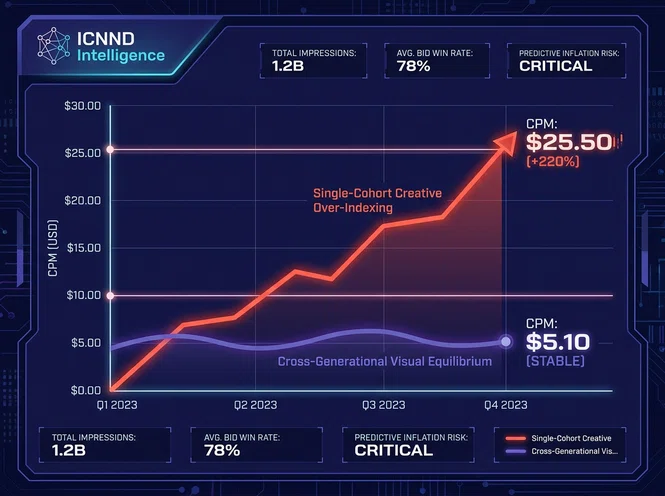
Over-indexing on single-demographic aesthetics introduces severe structural risks to paid accounts:
- Alienation of High-Yield Audiences: Older buyers who command the vast majority of disposable household capital are frequently repelled by chaotic visual layouts and ambiguous messaging.
- Auction CPM Inflation: Competing exclusively for Gen Z attention places campaigns in highly crowded bidding pools, raising CPMs during peak commercial periods.
Empirical Media Buy Observations from Scaling Cross Generational Campaigns
To demonstrate how demographic alignment functions in practice, consider audit data from a 14-month paid social spend totaling $2.4M across a consumer home wellness portfolio. The original media plan allocated 65% of the capital directly into Gen Z-centric Reels creatives, anticipating high viral exposure.
The initial results revealed a major strategic flaw: while video watch times were impressive, the blended CAC sat at an unsustainable $142 against an $85 target. The account was over-paying for engagement while missing high-intent converting segments.
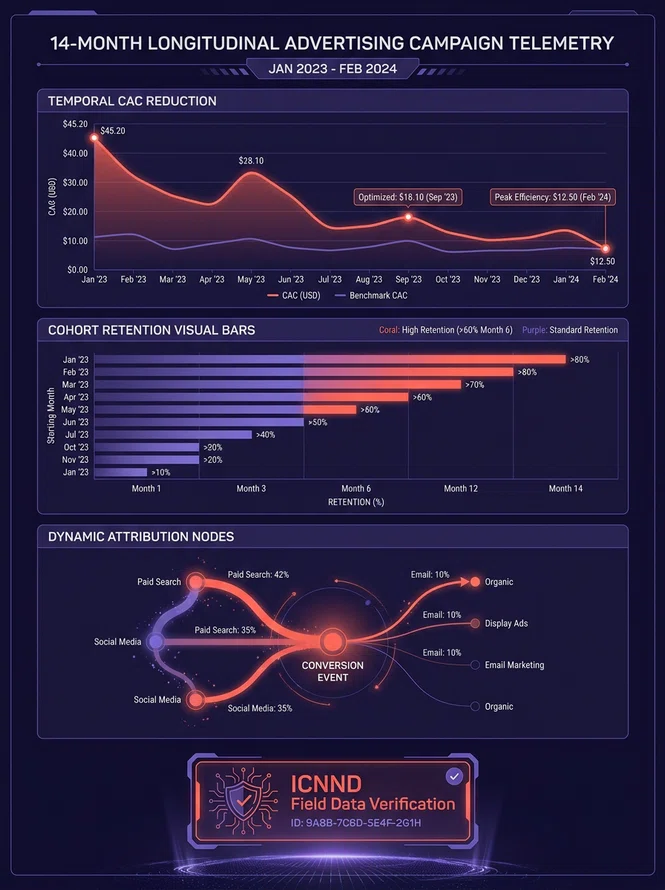
We restructured the media plan around behavioral clustering rather than explicit age caps. We shifted 45% of total budget into educational carousels for Millennials and high-contrast, direct-response static ads for older cohorts. Broad, open targeting allowed Meta's ad engine to deliver the right visual asset to each cohort dynamically.
The campaign outcomes proved the power of demographic diversification. Blended CPA dropped by 41% to $83.80, while Millennial purchasing volume drove a 32% increase in average order value. Furthermore, allocating capital to older demographic pools unlocked CPMs as low as $11.20, generating significant bottom-line margin expansion.
Strategic Alignment of Generational Attention Spans for Media Budget Allocation
Targetologists need an objective financial framework to justify media allocations to executive stakeholders. Rather than relying on guesswork, media plans should balance capital based on cohort yield potential, expected AOV, and auction costs.
PROPOSED PORTFOLIO ALLOCATION FRAMEWORK:
[Total Ad Spend Allocation]├── 50% Millennial Cohort (High AOV / Core Scale)
│ ├── Static Carousels (Consideration)
│ └── Retargeting DMs / Lead Forms
├── 30% Gen Z Cohort (Top of Funnel / Brand Velocity)
│ ├── Native UGC Reels (Discovery)
│ └── Direct-to-App Search Campaign
└── 20% Boomer / Gen X Cohort (High CTR / Arbitrage)
├── Direct Response Static Visuals
└── Frictionless Native Instant Experiences
By connecting CPM variances directly to ROAS projections, targetologists can easily defend demographic splits during executive media plan reviews. Higher CPM investments in Gen Z channels are balanced by lower cost-per-click inventory across mature user segments.
Algorithmic Content Distribution Across Distinct Generational Feed Loops
Modern machine learning systems have transformed digital ad targeting. Meta’s AI ad engine relies on vector search embeddings to analyze visual components, audio frequencies, transcribed text, and post interactions. The algorithm automatically maps creative assets to specific user behavioral clusters, rendering traditional age-gating filters largely obsolete.
In this ecosystem, creative execution serves as your primary targeting filter. When an ad includes high-contrast static imagery and simple typography, Meta’s machine learning systems automatically route that asset to older demographics who historically convert on those visual patterns. Conversely, fast-paced vertical video assets are naturally delivered to younger Reels consumers without manual intervention.

Beyond visual signals, algorithmic delivery heavily weighs active discussion threads. An active comment section sends powerful positive signals to Meta's machine learning core, expanding ad distribution across high-intent user clusters. Utilizing strategic growth services for optimizing paid social campaign comments helps establish early engagement signals, driving down CPMs across competitive demographic segments.
Tactical Implementation Blueprint for Generational Target Optimization
To successfully execute a cross-generational media strategy, media buying teams should deploy this systematic four-step protocol:
Pro Tip: Never isolate creative testing to a single demographic visual style. Running a high-contrast static ad alongside a fast-paced Reel within the same broad ad set allows Meta's system to capture low-cost conversions across multiple age groups simultaneously. For deeper algorithm documentation, review official Meta Business Insights reports.
💡 Frequently Asked Questions
Expert answers to common demographic media allocation challenges.
Has Gen Z completely abandoned Instagram for TikTok? +
Why are Baby Boomers so profitable on Instagram? +
How does Meta target age groups without manual demographic filters? +
What ad format works best for Millennial buyers? +

Written by Elena
View Full Profile →Senior Social Media Strategist & Algorithm Analyst
Elena is a seasoned SMM strategist specializing in paid media allocations and algorithmic auction dynamics across Meta visual networks. She helps brands turn demographic shifts into high-yield ad strategies.