
Decoding Instagram Global Heatmaps and Optimal Distribution Timing

Traditional social media advice operates on a fundamentally flawed premise. Industry blogs repeatedly tell creators to look at their native account insights, locate the hour with the tallest bar chart, and hit publish. This surface-level guidance completely ignores the mechanical reality of modern recommendation systems. Publishing your content at the exact moment millions of other accounts hit publish creates massive artificial bottlenecks.
To achieve predictable organic distribution, growth architects must look beyond simple online status. Meta’s recommendation pipeline evaluates assets through initial candidate generation, dynamic signal scoring, and real-time ad auction clearing. Understanding how to navigate these server-level constraints requires reverse-engineering signal velocity mechanics and content decay curves.
The Shift from Chronological Feeds to Signal Velocity Mechanics
Publishing during macro-peak user windows frequently suppresses your total reach. When user activity peaks across major geographical regions, automated enterprise scheduling platforms trigger millions of API calls on the exact hour mark. This creates acute server-side queue congestion and elevates feed competition to maximum density.
Stop publishing on peak hour marks. Meta's ranking architecture prioritizes high early velocity within clean, low-competition feed inventories. Publishing during pre-peak ramp-up windows (30 to 45 minutes prior to regional activity spikes) allows your content to clear initial cold-start cohorts before ad auction saturation throttles organic reach floors.
Simultaneously, Meta’s ad engine increases monetization loads during peak user hours. Because sponsored media inventory takes precedence in user feeds, the available real estate for organic non-follower distribution shrinks dramatically. Your post is forced to compete against highly optimized paid campaigns alongside a massive wave of fresh organic uploads.
The solution lies in targeting pre-peak ramp-up windows. By distributing content 30 to 45 minutes before the regional user surge occurs, your post accumulates early engagement metrics while feed congestion is low. When the user volume peaks, your asset already possesses high velocity scores, securing priority placement near the top of user feeds.
When new media enters the ranking pipeline, Meta’s recommendation system assigns it to a localized testing cohort comprising approximately 1% to 3% of your total active followers. The system monitors micro-interactions to establish a baseline quality score before expanding reach to secondary lookalike clusters.
The mathematical weight of engagement signals decays rapidly over time. Signals generated within the first 45 minutes of publishing carry an exponential multiplier compared to interactions recorded three hours later. If your testing cohort is flooded with competing content, their dwell time drops, signaling low asset value to the ranking engine.
Global Activity Aggregation and Data Normalization Methods
Relying exclusively on native Instagram Insights leads to strategic errors caused by unadjusted time-zone aggregation. Native dashboards group active follower metrics into broad time blocks without accounting for active user intent or regional engagement propensity. A follower passively opening the app during a late-night waking moment exhibits completely different intent signals than a user actively browsing during a morning commute.
To construct an actionable publishing schedule, brand managers must normalize raw global activity. This process involves evaluating UTC time offsets against specific user intent modes: active messaging, high-intent sharing, quick visual scrolling, and extended video consumption.
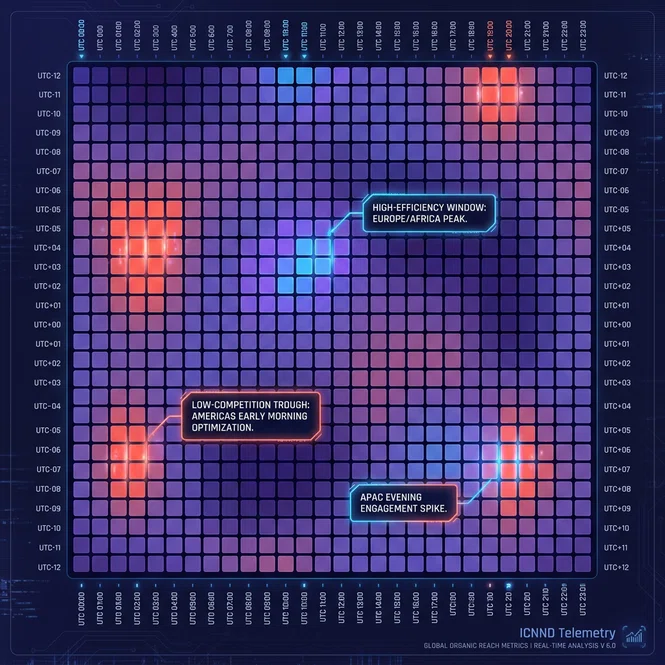
Isolating these low-competition velocity troughs ensures your content reaches active users when feed inventory is relatively uncrowded. This environment maximizes your asset's initial exposure duration, elevating micro-dwell indicators before broader competitive assets arrive.
Algorithm Latency and First Hour Velocity Metrics
Modern recommendation infrastructure relies on multi-stage ranking pipelines. When you upload a post, the asset does not instantaneously populate the feeds of all active followers. Server-side batch processing queues introduce a structural processing delay ranging from 15 to 20 minutes before full media indexation occurs.
During this indexation window, Meta calculates initial visual embeddings and audio transcripts. Content creators who publish at the height of peak traffic suffer from extended queue latency, meaning their posts miss crucial initial user sessions. By publishing slightly ahead of schedule, you ensure your media asset completes candidate generation before peak traffic begins.
Pro Tip: Prioritize Direct Message shares within the first 60 minutes. Algorithmic telemetry weights a private send via DM significantly higher than standard surface likes because it signals high-intent organic distribution.
Watch-time density serves as another critical ranking signal. Your initial audience cohort must yield high completion rates to push the post into secondary lookalike audiences. Posts that generate immediate extended dwell times bypass lower recommendation tiers rapidly, entering high-volume recommendation channels.
The Fallacy of Universal Peak Posting Windows
The industry search for a single universal best time to post (such as "Wednesdays at 9:00 AM") is fundamentally flawed. Broad static recommendations fail to account for industry sector variations, content formats, and niche competitive density. A strategy designed for direct-to-consumer apparel will fail if applied directly to enterprise SaaS advisory services.
B2B audiences demonstrate concentrated activity during workplace transition points—specifically early morning routines, midday lunch breaks, and late-afternoon wrap-up periods. Conversely, B2C consumer audiences exhibit extended engagement spikes during evening recovery windows and weekend downtime.
Furthermore, publishing simultaneously with your direct competitors splits audience attention within your specific category. If twenty top accounts in your niche post at 10:00 AM, you enter a local cannibalization loop. For a deeper technical analysis on how vector spaces process competitive assets, review our detailed guide on Instagram Explore algorithm mechanics and candidate scoring.
Focusing purely on follower online counts creates an illusion of opportunity. Having 70% of your audience marked as online does not guarantee high active engagement if those users are passively viewing Stories or responding to private messages. True distribution efficiency relies on catching users during active feed consumption states.
Audience Micro Segmentation Across Differentiating Timezones
Global brands and multi-regional creators face distributed audience demographics. A peak posting window in North America (EST/PST) frequently aligns with sleeping hours across European or Asia-Pacific regions. Optimizing for one primary region without strategy can permanently starve secondary markets of initial exposure.
Addressing multi-timezone distribution requires identifying the Global Equilibrium Point. This specific 3-hour daily window offers the optimal balance between high active availability in primary target markets and secondary overlap in adjacent regions.
According to research on Datareportal Research digital usage trends, user consumption behavior shifts dramatically depending on local working hours and mobile infrastructure access. Cross-referencing these global activity models helps identify posting windows that avoid overnight engagement dead zones in key secondary markets.
Content Architecture Variance Between Reels and Static Posts
Distribution timing models must adapt to the specific media architecture being published. Short-form video assets and static image carousels decay along entirely different operational timelines within Meta's ranking index.
The Reels recommendation engine operates on an extended evaluation lifecycle. Rather than relying entirely on immediate 60-minute velocity, Reels undergo continuous testing across dynamic interest clusters over a 72-hour window. Consequently, initial upload timing is less critical for Reels than sustained retention metrics and audio processing clarity. To understand how artificial intelligence processes video assets frame by frame, consult our technical breakdown on how AI processes visual media for semantic search.
Static posts and multi-slide carousels depend heavily on immediate initial velocity. However, carousels feature a unique algorithmic re-serving mechanism: if a user scrolls past the first slide without interacting, Meta frequently re-serves the second slide during a subsequent app session. This extends the effective distribution window of carousels by 4 to 6 hours compared to single-image uploads.
Enterprise Account Distribution Timelines Case Study
While advising a global B2B SaaS account with 2.4 million followers, our team encountered a persistent reach ceiling. The brand’s internal team strictly adhered to native account insights, publishing daily at exactly 11:00 AM EST—the account’s historical peak online follower window. Despite strong creative production, organic reach remained flat.
We launched a 60-day diagnostic experiment to test server-queue avoidance and pre-peak signal velocity. The hypothesis was simple: publishing before mass automated scheduling queues execute would allow our media assets to secure early engagement without auction interference.
We adjusted the global publishing schedule back by exactly 45 minutes, moving the operational distribution timestamp from 11:00 AM EST to 10:15 AM EST across all major content tracks.
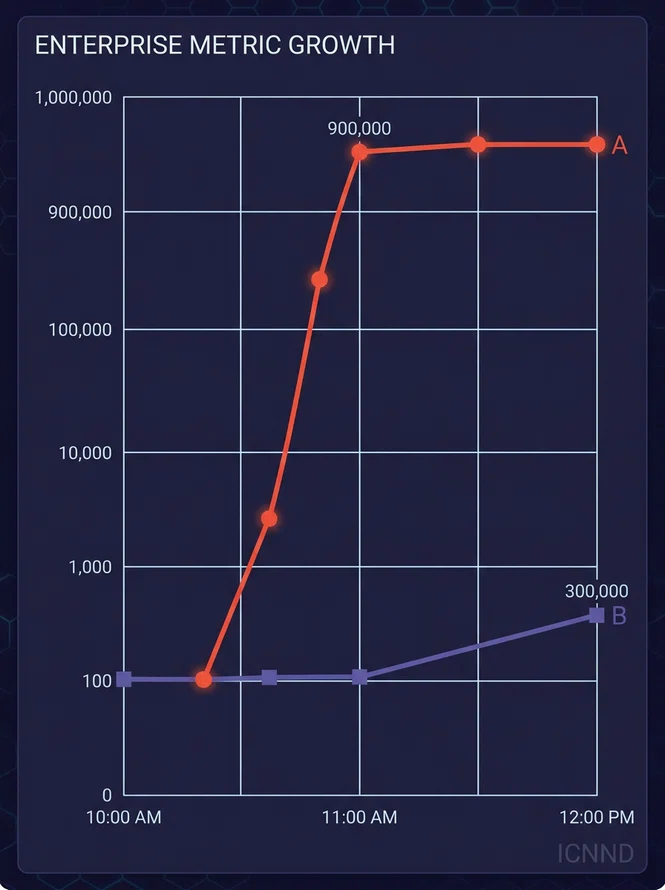
The operational results confirmed our structural hypothesis:
01. Server Queue Bypass: Publishing at 10:15 AM EST allowed our posts to complete initial candidate generation and visual indexation prior to the mass influx of scheduled enterprise content at 11:00 AM.
02. Early Cohort Lock-in: The assets secured uninterrupted dwell time and comment signals within clean feed inventory, establishing strong quality metrics before ad load density increased.
03. Downstream Feed Priority: When the broader user base logged on at 11:00 AM, our posts had already achieved top-tier rank scores. Meta’s engine served our validated assets at the top of user feeds over fresh, unproven content.
Over the 60-day trial period, total non-follower organic reach expanded by 142%. Additionally, saved-asset velocity increased by 38%, proving that publishing ahead of peak activity consistently outperforms publishing directly within peak windows.
Empirical Testing Framework for Account Specific Peak Identification
Because every audience demographics distribution is unique, long-term success requires implementing an account-specific timing diagnostic rather than relying on generic industry benchmarks.
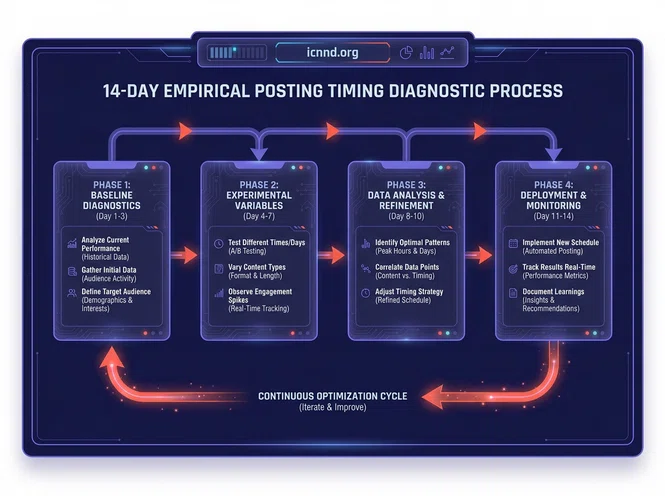
To execute this diagnostic framework effectively, divide your daily posting operational schedule into four distinct phases over a 14-day cycle:
Phase 1: Baseline Activity Mapping. Extract your raw native insights and identify your top three active follower windows across standard weekly cycles.
Phase 2: Pre-Peak Offset Testing. Test publishing timestamps offset by 30, 45, and 60 minutes prior to your primary active windows. Keep video formats and visual structures constant to isolate timing variables.
Phase 3: Post-Peak Control Testing. Publish select control assets 30 minutes after peak windows to verify signal degradation rates within crowded feed conditions.
Phase 4: Velocity Ratio Analysis. Compare the ratio of 60-minute reach velocity against 24-hour total non-follower impressions. The window yielding the highest initial velocity ratio represents your optimal publishing target.
Actionable Protocol for Sustainable Post Scheduling
Optimizing your Instagram posting schedule is a powerful algorithmic leverage strategy, but it cannot fix low-quality creative content. Timing serves as an accelerator for content that already offers high baseline value.
To build a sustainable publishing strategy, shift away from exact hour marks (such as 12:00 PM or 5:00 PM). Schedule uploads at non-standard timestamps, such as 11:42 AM or 4:18 PM, to avoid batch API submission spikes from automated third-party tools.
Additionally, generating high-quality contextual discussions in your comment section within the first hour remains vital for sustaining algorithmic momentum. Strategists seeking to establish immediate organic engagement signals often incorporate social proof solutions available through ICNND's engagement infrastructure to foster initial audience trust and spark active user dialogue.
According to engineering documentation on Meta AI system architecture, recommendation models continuously adapt to changing user habits. Audit your timing performance quarterly to adjust for seasonal demographic shifts, regional daylight savings changes, and platform updates.
💡 Frequently Asked Questions
Expert guidance on Instagram distribution timing and signal velocity.
Why is posting at peak activity times ineffective? +
What is a pre-peak ramp-up window? +
How does content format affect optimal posting timing? +
Why should I avoid scheduling posts on exact hour marks? +

Written by Elena
View Full Profile →Senior Social Media Strategist & Algorithm Analyst
Elena is a veteran growth strategist with over a decade of experience analyzing social platform architecture. She specializes in reverse-engineering Meta distribution mechanics to help brands achieve scalable organic reach.